
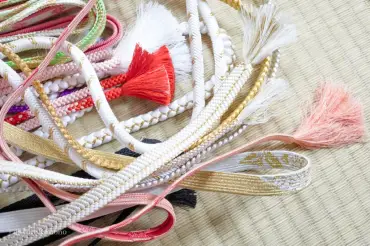
Obijime may look like a small detail, but they have an important role in kimono dressing.
With otaiko musubi, the obijime passes through the inside of the obi and helps hold the lower part of the shape in place. It prevents the tare — the hanging end of the obi — from falling down.
So an obijime is not only decorative. It is also a very important cord that supports the structure of the obi.
At the same time, obijime also affect the formality and overall impression of your outfit. Once you understand a few simple points — width, metallic threads, texture, and color — choosing the right obijime becomes much easier.
This table is an English translation of Kimono Sunao’s.
What Does an Obijime Actually Do?
When wearing an otaiko musubi, the obijime helps secure the shape of the obi.
If the obijime becomes loose or comes undone, the lower part of the otaiko is no longer properly supported. This can cause the obi shape to lose its structure or even collapse.
With hanhaba obi, however, the obijime is often used more decoratively. In that case, it does not always have the role of holding the obi together. Even if it becomes loose, the obi knot itself may not fall apart — but the obijime can still slip off.
So depending on the obi style, the obijime can be either functional, decorative, or both.
Main Types of Obijime
Most obijime are made using kumihimo, a traditional Japanese braiding technique.
Kumihimo is made by braiding many fine threads together, either by hand or machine. There are many different types, but for kimono styling, it helps to understand a few basic shapes.
Flat Braid / Hira-gumi
Hira-gumi are flat and often wider.
They can look formal, especially when they contain gold or silver threads. There are many variations, including gradation colors, woven patterns, and richly decorative designs.
A well-known type of flat braid is Kōrai-gumi.
Flat obijime are often used for formal and semi-formal kimono, depending on the color, width, and use of metallic threads.
Round Braid / Maru-gumi
Maru-gumi have a round cross-section.
They can be formal or casual depending on their thickness, material, color, and decoration. Some are very simple, while others are more decorative and are often seen with furisode.
Square Braid / Kaku-gumi
Kaku-gumi have a more square-shaped cross-section.
Many of them are soft and flexible. Well-known examples include Yurugi-gumi and Mitake-gumi.
Among them, Yurugi-gumi is especially useful because it can work with both everyday kimono and, depending on the color and coordination, semi-formal outfits.
Maruguke
Maruguke is not braided in the same way as kumihimo. It is made from fabric and has padding inside.
Decorative maruguke are often worn with furisode, but there are also simpler versions for casual kimono.
Sanbu-himo and Obidome
Sanbu-himo are thinner obijime, usually around 1 cm wide, made to be worn with an obidome.
An obidome is an accessory that slides onto the obijime. Many obidome are designed for sanbu-himo, but brooches can sometimes be adapted as well.
Sanbu-himo are very useful for casual styling, because changing the obidome can completely change the mood of the coordination.
They are not usually used for the highest formal occasions, but they can sometimes be used in semi-formal coordination if the obidome itself is appropriate, such as pearl, gemstone, or other formal materials.
A Quick Overview
This table gives a general overview of how width, metallic threads, and kimono type relate to formality.
You do not need to memorise everything. It is simply a reference point.
| Cord Width | Thread | Characteristics | Suitable Kimono | |
|---|---|---|---|---|
|
Formal Casual |
Thick (1.6 cm and above) |
Gold or Silver | Kurotomesode Irotomesode |
|
| Contains gold or silver | Furisode Houmongi Mon-tsuki Iromuji Mon-tsuki Edo Komon |
|||
| No gold or silver | Pure white | Irotomesode | ||
| Non-white | Tsukesage Iromuji (without crest) Edo Komon (without crest) |
|||
| Medium (1–1.5 cm) |
Contains gold or silver | |||
| No gold or silver | Flat braid (plain) | |||
| Flat braid with accents | Komon Tsumugi Wool Cotton Yukata |
|||
| Thin (under 1 cm) |
Round braid |
1. The Wider the Obijime, the More Formal It Is
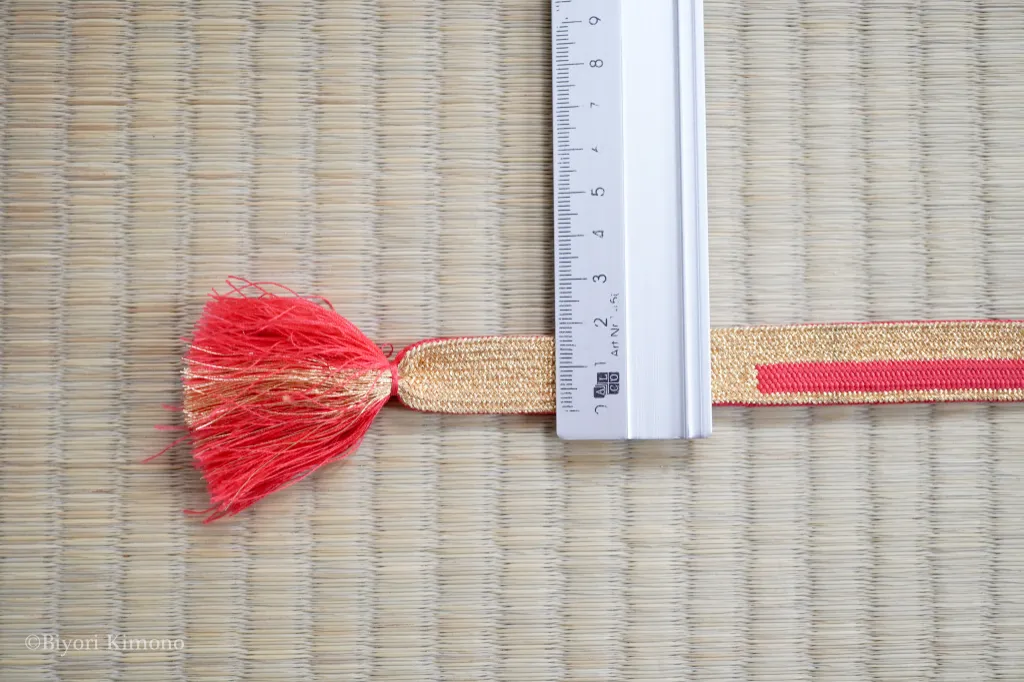
One of the clearest indicators of formality is width.
A wider obijime creates a stronger visual presence and is typically used for more formal occasions. Thicker styles are often paired with formal kimono such as furisode or tomesode, where a certain level of structure and presence is expected.
Narrower obijime, on the other hand, feel lighter and more relaxed. They naturally suit everyday kimono and casual settings.
If you are unsure where to start, looking at the width alone already gives you a reliable direction.
These are the kinds of small details I usually go through step by step in my kimono dressing lessons, as they make a big difference in the overall balance.
2. Gold and Silver Threads Increase Formality
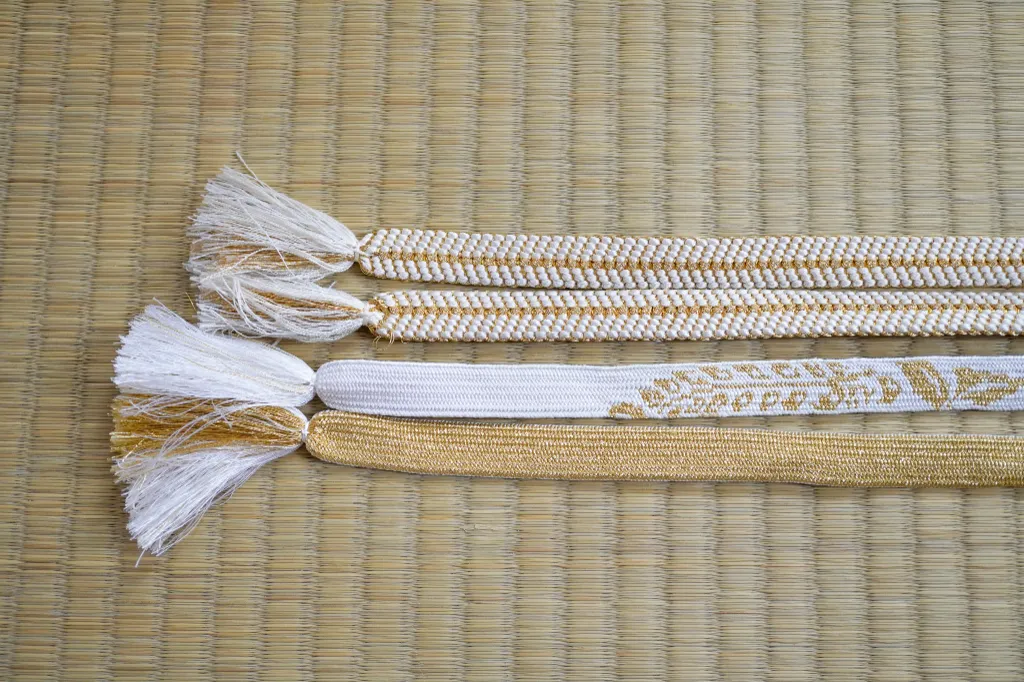
Another important element is the use of gold or silver threads.
These metallic accents add a sense of ceremony and refinement. Because of this, they are often used in more formal coordination. Even a small amount of gold or silver can shift the impression of the entire outfit.
Without these elements, the obijime feels more understated and is easier to incorporate into casual styling.
When combining pieces, it helps to think of gold and silver as a signal: the more present they are, the more formal the look becomes.
3. Thin Obijime Are Casual (But Very Versatile)
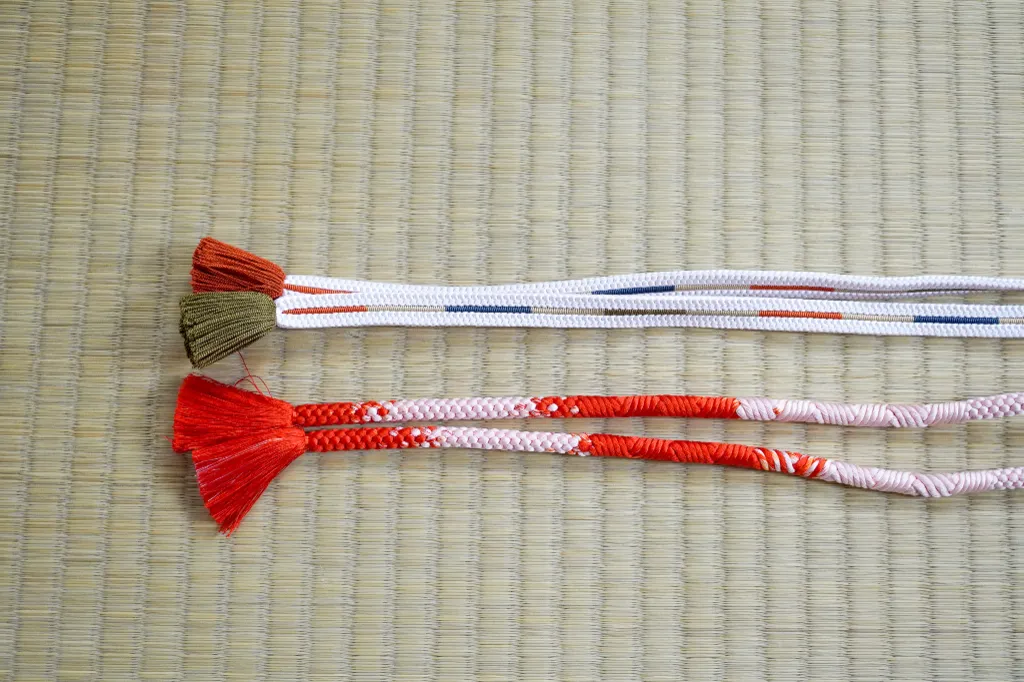
Thin obijime are often the easiest to wear.
They can be used throughout the year and work well with everyday kimono such as komon or tsumugi. Because they are less visually dominant, they blend naturally into more relaxed outfits.
At the same time, their simplicity means they are not typically chosen for formal occasions. With highly formal kimono, a thin obijime can feel slightly too light and informal.
Still, for daily wear, they are one of the most practical options.
4. Coarser Weaves Are for Summer
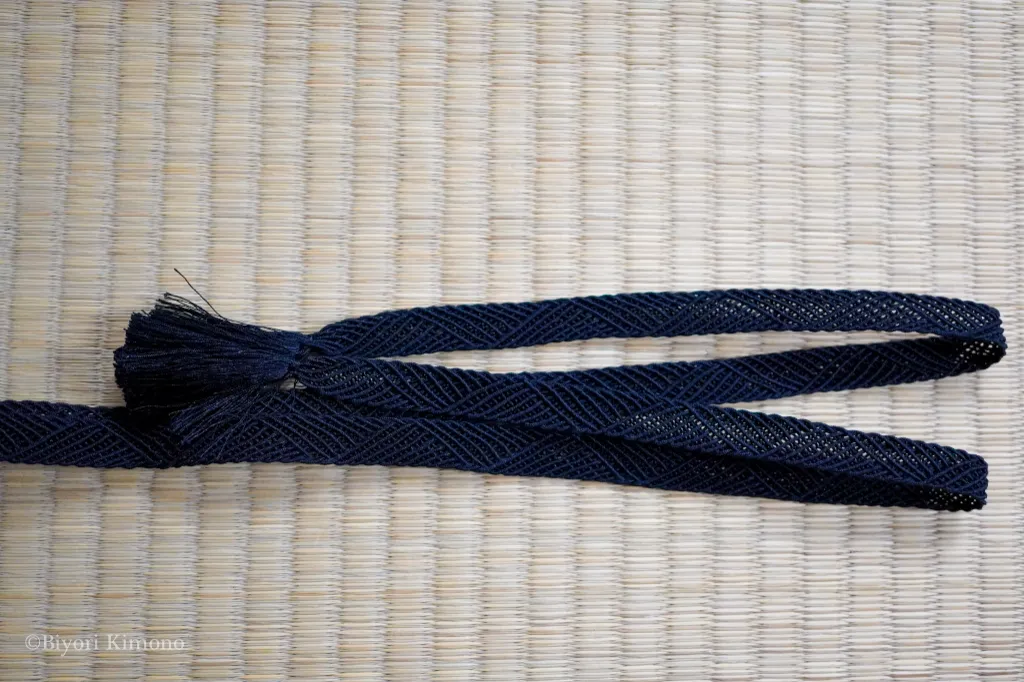
Beyond width and material, texture also plays a role.
Obijime with a tighter, denser braid are suitable across seasons and often appear more formal. In contrast, those with a looser, more open weave create a lighter impression.
This type of texture is commonly associated with summer. It visually suggests breathability and aligns with the seasonal feeling of summer kimono.
Even without changing color, the structure of the braid itself can communicate the season.
5. Pure White Obijime Have a Specific Role
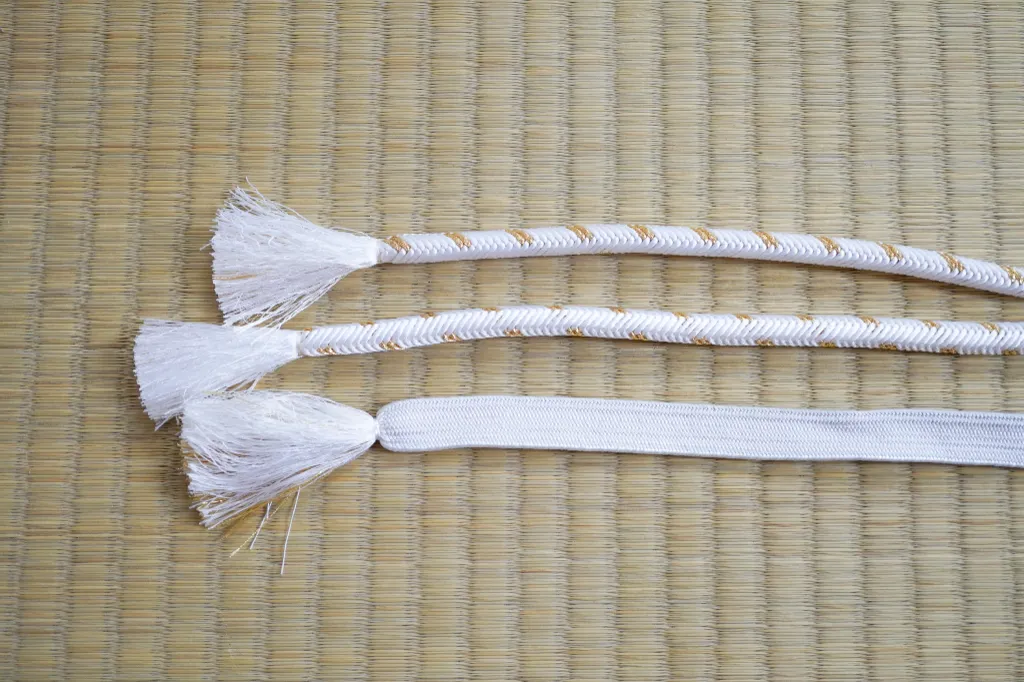
White is a formal base color for obijime and is commonly used with kimono such as irotomesode. For higher formality, it is often combined with gold or silver.
They are traditionally worn with irotomesode and carry a very clean, formal impression. Because of this, their use is more specific compared to other colors.
Rather than being a versatile everyday choice, white is often reserved for particular formal contexts where clarity and restraint are important.
Practical Examples
For Kurotomesode or Formal Irotomesode
For the most formal kimono, choose a dedicated formal obijime.
White with gold, white with gold and silver, gold and silver, or gold-based flat obijime are standard choices.
For first formal dress, it is especially important that the overall level of formality is consistent. Because of this, it is better to use an obijime specifically suited for formal occasions.
For Furisode
Furisode are also highly formal, but the obijime used with furisode are different from those used with tomesode.
They are often more colorful and decorative. Some have ornaments, tassels, or three-dimensional details.
Maruguke obijime are also often seen with furisode.
The goal is not only formality, but also a youthful, festive, and華やか impression.
For Houmongi, Tsukesage, or Semi-formal Iromuji
For semi-formal kimono, pale-colored flat obijime with gold or silver threads are very common.
Soft colors are easy to coordinate because they do not overpower the kimono or obi. Pale pink, cream, light grey, pale green, beige, and similar gentle shades are all useful options.
A pale Yurugi-gumi can also work well, especially for a more understated coordination.
There is no strict rule that dark colors are forbidden, but pale colors are often chosen because they blend more softly with formal and semi-formal outfits.
For Komon, Tsumugi, Wool, Cotton Kimono, and Yukata
For everyday kimono, you have much more freedom.
Medium-width or thin obijime without gold or silver are easy to use. They feel relaxed and are suitable for casual styling.
This is also where sanbu-himo and obidome become very enjoyable. A small obidome can add personality without making the outfit feel too formal.
For hanhaba obi, the obijime may be used simply as decoration, so you can play more freely with color, texture, and accessories.
If You Buy Only One Obijime
If you mainly wear casual kimono but want something that can also work for semi-formal occasions, a pale-colored Yurugi-gumi is a very useful first choice.
It is simple, refined, and easy to coordinate.
A soft single color or gentle gradation is practical. If it has a small amount of silver thread, it can be even easier to use for semi-formal outfits while still remaining wearable with everyday kimono.
However, if you need an obijime specifically for kurotomesode or formal irotomesode, it is better to buy a dedicated formal one in white, gold, or silver.
Putting It Together
In practice, most obijime choices come down to a few key elements.
Width sets the overall level of formality.
Gold and silver add a sense of ceremony.
White gives a formal and restrained impression.
Texture can express the season.
The braid type also influences how formal or casual the obijime feels.
If you match the formality of your obijime to your kimono and obi, the whole coordination will usually feel balanced.
At the same time, these are guidelines, not strict rules. You do not have to follow them if you do not want to.
However, understanding TPO — time, place, and occasion — and showing that awareness in your coordination often gives a quiet impression of good manners.
Once you start paying attention to these details, choosing obijime becomes much more intuitive.
There are said to be thousands of different kinds of obijime. Each one can change the atmosphere of a coordination, even though it is only a small cord.
That is also what makes them so enjoyable.
Leave a Reply